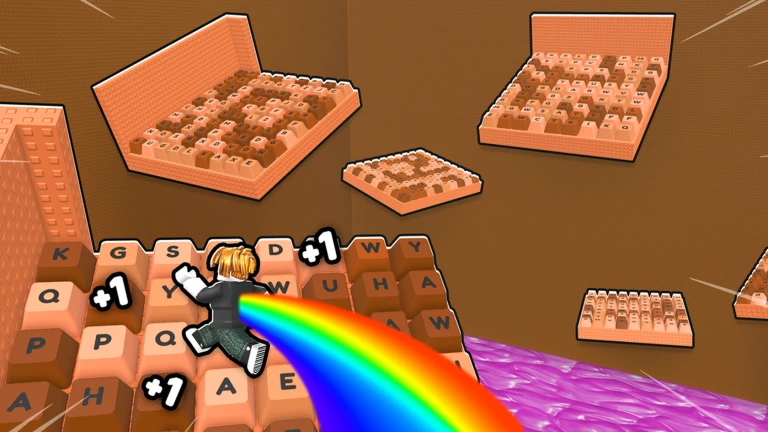
Choose how controllable your current Speed feels, your next goal, how much reset risk you accept, and whether rewards have been checked. The planner returns one bounded next run and explains what evidence to collect.
Describe the current run in four inputs
The planner needs four observations. First, classify Speed feel as starter, stable, fast but reset-prone, or very fast. Second, choose the immediate goal: check rewards, farm Speed, evaluate rebirth, push stages, or test an upgrade. Third, set reset tolerance to low, medium, or high. Fourth, record whether current shared or social reward candidates have been checked in the account. These are decision inputs, not hidden stats. Use the state in the current server, not a number copied from a video. If the current Speed cannot be controlled, mark it reset-prone even when the displayed value looks impressive.
Run the reward preflight without publishing an unsupported claim
If rewards have not been checked, inspect only benefits that the current official group surface or live game interface actually presents before committing to a long farm. Record the visible label, whether the account receives anything, and the time of the check. The specialist review found conflicting community reports, so this planner deliberately does not publish a candidate string or promise an active reward. Continue with the ordinary movement loop when no benefit is visible. The preflight matters because an observed boost may change how a session should be compared, while an unavailable or account-sensitive benefit should not keep the player from progressing.
Choose farming when control or baseline quality is weak
Recommend farming when Speed feels unstable, reset tolerance is low, or there is no repeatable route measurement. The output should name a safe keyboard lane, a fixed observation window, and a stop condition. Record clean runs and resets, then keep camera and route stable. A farm recommendation is not a command to remain on the easiest path forever. It creates a baseline that makes later stage or rebirth decisions readable. If movement becomes less controlled as Speed rises, shorten the lane or reduce risk until completions recover. The next branch should open only when the player can explain where the current route succeeds and fails.
Evaluate rebirth as a next-session tradeoff
If the live game presents a rebirth or reset option, use the planner only after recording what the interface says will be lost and retained. Compare the likely value of the next fifteen to thirty minutes with the value of keeping the current run for stage attempts. The owned source treats this as a conservative decision because exact formulas are not verified. A player who still loses control may benefit from practice before resetting; a stable player may test whether the visible multiplier improves the new baseline. The tool must never supply an invented cost, retention list, or break-even point. It organizes the evidence the player needs before choosing.
Push stages only with a reset budget
A stage-push recommendation requires a stable farm baseline and an explicit reset budget. Choose how many failures or minutes you will allow before returning to farming. Use the same approach angle and camera rhythm for the difficult transition, and mark whether failure comes from insufficient Speed, overcorrection, or unfamiliar route geometry. If the budget is exhausted without improvement, the planner sends the next run back to the safe lane. High reset tolerance permits more attempts, but it does not make an unsupported stage table accurate. The current server's route and labels remain authoritative, especially when videos show older layouts or update-specific worlds.
Test upgrades with one observable outcome
When the goal is an upgrade test, identify the role before spending: repeatable Speed gain, movement consistency, stage access, or cosmetic preference. The official listing confirms multipliers, but exact trails, auras, treadmills, and shop values are not supported by the current source packet. Change one purchase or setting, repeat the baseline route, and compare completions, resets, or visible gain under the same conditions. If the outcome cannot be observed, do not turn the item name into a ranking. Save the recommendation with its date and input state. After an update, reward change, reset, or new world, rerun the planner rather than reusing an old answer.
What changed across observed Roblox snapshots
This is our own dated history of the same public Roblox fields. It shows observed movement, not a prediction or an explanation for why players moved.
Source: QuestSignal immutable release history · newest five observations shown
What this guide does not assume
The planner is a qualitative branch tool, not a formula simulator. It does not know exact Speed thresholds, multiplier values, rebirth costs, retained items, stage requirements, or item statistics, and it does not certify disputed codes.
Refresh trigger: Refresh when the owned planner logic changes, reward status becomes creator-confirmed, or reproducible evidence establishes new rebirth, stage, world, trail, aura, treadmill, or multiplier rules.