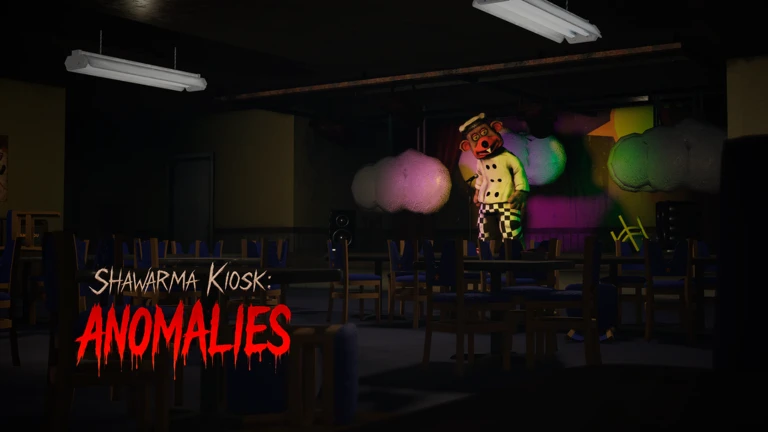
Choose the cue location, mark your confidence, and state whether it clearly conflicts with a current taped rule. The inspector returns a next action—pause, compare, sweep, or consult a route page—without pretending to identify every anomaly.
Enter three observations, not an anomaly name
The inspector asks where the cue appeared, how certain you are, and whether it clearly breaks a taped rule. Cue locations are customer or order, room or counter, CCTV, sound without a clear visual, and Backrooms or ending route clue. Confidence can be clear, noticed once, or conflict with an older guide. The final input records whether the current rule set is actually contradicted. These inputs are intentionally narrow. They describe what the player can see now rather than asking the tool to guess a hidden label. Before submitting, read the taped rules again so the rule-break input reflects the current shift.
Customer plus clear rule break means pause and verify
When the cue is on the customer or order and it visibly breaks a taped rule, the tool prioritizes the active decision. Pause the order, inspect the customer and request once more, then use the response available in the current shift. The inspector does not tell every player to refuse or serve because the available sources do not support a permanent answer table. Its value is ordering attention: the immediate customer comes before a distant route clue. If the second look no longer shows the contradiction, return to the normal flow. If it remains clear, act according to the current rules rather than an old community label.
Room or CCTV mismatch needs a two-angle comparison
For a room, counter, door, or CCTV cue that breaks a rule, compare the physical kiosk with the camera view. A mismatch repeated across both angles deserves priority before returning to the order. If only the camera looks odd, check the live room once; if only the room looks odd, use the camera as confirmation. The tool does not assign an anomaly name or exact counter. It returns a practical sequence that reduces false positives. When the mismatch disappears, continue the shift. When it repeats and conflicts with a rule, resolve the current situation using the in-game response rather than forcing a route from memory.
Sound-only and conflicting-guide inputs trigger rechecks
If the cue is a sound and confidence is not clear, the inspector requests one complete visual sweep. Sounds can be warnings, ambience, or effects that are difficult to place, so they should not become proof without a visible mismatch. If confidence is marked as a conflict because an old guide and current shift disagree, the current rules and interface win. Record the difference for later review instead of bending the live state to fit the article. These branches are not indecisive; they stop one weak signal from ending a run and create a repeatable way to collect better evidence.
Route clues are sent to a dated route reference
When the cue concerns Backrooms, an ending, or another hidden route, the inspector does not mix it with normal customer decisions. It asks the player to preserve the run if possible and compare the clue with the dated route or Badge reference. Official Badges such as Feed the Backrooms prove that related objectives exist, but they do not disclose the full unlock sequence. The best output is therefore a source check, not a guaranteed trigger. Record the Badge or clue name, surrounding room state, current rules, and date. Stop after repeated failure rather than converting a stale community step into a claimed mechanic.
Use the result as a next check, not a verdict database
Every output should lead to an observable action: pause the current order, compare room and camera, perform one visual sweep, trust the current build, or open a route reference. After the action, decide from what the game shows. Do not save the output as proof that a named anomaly exists, and do not infer rewards or ending counts. If a new update changes the counter rules or interface, the old branch may no longer fit. The inspector remains useful because its core process is conservative: locate the cue, rate confidence, compare the current rules, and escalate only when the evidence becomes clearer.
What changed across observed Roblox snapshots
This is our own dated history of the same public Roblox fields. It shows observed movement, not a prediction or an explanation for why players moved.
Source: QuestSignal immutable release history · newest five observations shown
What this guide does not assume
The tool triages visible cue types. It does not recognize game images, identify named anomalies, guarantee serve or refuse actions, prove route triggers, or infer rewards. The current taped rules and interface remain authoritative.
Refresh trigger: Refresh when the taped-rule system, cue surfaces, in-game response options, Badge-backed routes, or the owned tool's branch logic changes through reproducible evidence.