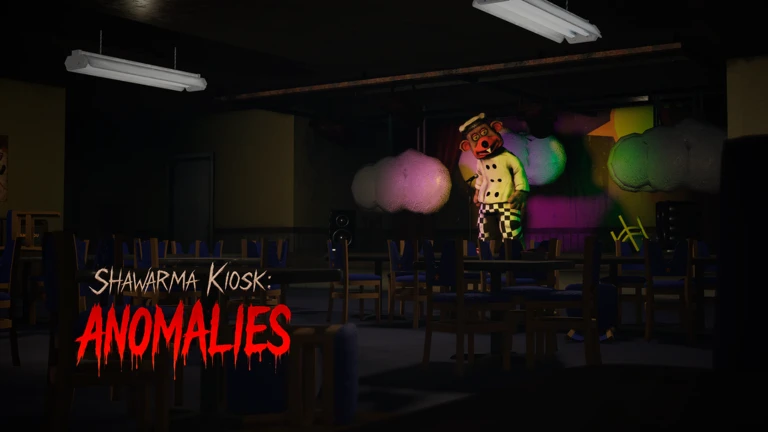
Read the taped rules in the current shift, compare the customer and request, scan the counter, door, room, and CCTV, then act only on a clear mismatch. A strange sound or old video answer is a reason to recheck, not proof of an anomaly.
Read the current taped rules before the queue starts
The creator's Roblox description says the job is to keep the grill hot, serve every order, and follow rules taped to the counter for safety. Those rules in the current shift are the strongest immediate reference available to the player. Read them before the first order and return to them when a guide, memory, or video disagrees. Do not assume the rule set is permanent across updates. The goal is not to memorize a community list of anomaly names; it is to establish what normal looks like in this server. A clear baseline makes later customer, room, and camera differences easier to evaluate without guessing.
Check the customer and order before looking for secrets
For each order, look at the customer, the request, and the way the interaction behaves. Compare anything unusual with the taped rules before clicking through on autopilot. A visible contradiction deserves a pause and one careful recheck. A vague feeling does not. Do not let a growing queue push you into treating speed as certainty. The owned guide prioritizes the active customer because it can affect the immediate decision, while Backrooms and ending clues are longer-term tasks. If the customer and request match the current rules, continue the ordinary flow rather than manufacturing an anomaly from a minor animation difference.
Scan the counter, door, room, and CCTV as one system
When the customer check is inconclusive, move outward through the kiosk. Look at the counter and doorway, then the room, and finally the CCTV view. The camera is a second angle, not unquestionable proof by itself. A repeated mismatch that appears in both the live room and camera is stronger than one uncertain frame. Compare environmental changes with the rules visible in the current shift. If the difference disappears on the second pass, return to the order. This routine reduces false alarms because it asks the player to confirm where the cue exists instead of relying on a sound, a cropped screenshot, or an old list.
Treat sounds and one-frame changes as prompts to verify
A strange sound can be useful, but it is easy to misread when no visual evidence follows. Pause briefly and complete one visual sweep: customer, order, counter, door, room, and CCTV. If no rule break appears, continue and keep the sound as an unconfirmed note. Do not repeat the entire shift around one audio cue or turn it into a named anomaly. The same rule applies to a single odd camera frame. The current content deliberately avoids an exact counter for every anomaly because community lists age quickly. A short recheck protects the run better than an overconfident answer based on incomplete evidence.
Delay Backrooms, endings, and Badge routes until normal orders are stable
The official Badge inventory includes names that signal Backrooms, endings, inspection, streak, and completion interests, but a Badge name does not prove the exact trigger, route, reward, or current availability. Learn the ordinary customer and room checks before spending a run forcing hidden interactions. If a route clue appears, save the context you can: the current rules, customer state, room or camera change, and the date. Open the relevant route reference only after immediate danger is under control. Repeating an old secret step while the active order remains unresolved is more likely to waste the shift than to confirm the route.
Recover when the guide and current build disagree
Trust the current taped rules and interface over an older video or copied list. If a supposed anomaly answer fails, return to the four-surface scan and verify the mismatch again. If a hidden route step fails twice, stop repeating it and check the current update or source status. If a reported code does not redeem, that failure is a status observation, not permission to invent a reward. Record what changed instead of forcing the old answer. This source-first recovery method keeps the guide useful after updates: establish normal, confirm a clear rule break, defer uncertain secrets, and preserve enough context for a later correction.
What changed across observed Roblox snapshots
This is our own dated history of the same public Roblox fields. It shows observed movement, not a prediction or an explanation for why players moved.
Source: QuestSignal immutable release history · newest five observations shown
What this guide does not assume
The official description confirms orders and taped rules. The guide does not publish a complete anomaly list, guaranteed serve-or-refuse answers, detection rules, exact route triggers, secret rewards, or code rewards. Badge names are intent clues, not walkthrough proof.
Refresh trigger: Refresh when the creator description or Badge inventory changes, a new first-hand shift capture changes the scan order, or a reproducible route shows a previously unsupported anomaly or ending procedure.