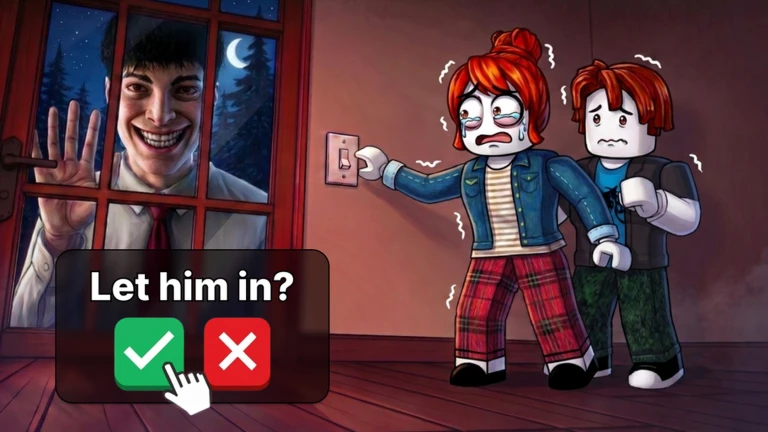
Do not memorize a single monster list. Match the story to one evidence channel, compare the observed state with the dated case record, and return an uncertain result when the signal is missing or current sources disagree.
Start from the claim, not the model
The visitor directory covers 18 current community-reported case files, but the useful part is its structure rather than the number. Each record stores the visitor's request, the evidence channel, the ordinary signal, the warning signal, the next action, the common mistake, and the source status. Begin by repeating the story in plain words. A uniform, friendly face, or frightening design is not evidence. The claim tells you where to look. This method also scales to a new character whose appearance has no reliable guide yet.
- Who is speaking?
- What event, object, room, vehicle, or relationship do they claim?
- Which single observation would support or contradict that claim?
- Is the case community-checked, reported, or source-split?
Use outside and vehicle checks for outside stories
When a story depends on law enforcement, an animal, a car, or activity near the house, find the outside view that can actually test it. The Police Man case is currently reported as an ordinary police car versus a warning associated with a beat-up van. The Dog Owner case sends the player to the backyard camera to compare the story with what appears there. These are community-reported checks, not official developer rules. The transferable lesson is to inspect the named outside evidence and avoid accepting the uniform or dialogue as proof.
- Police story: inspect the relevant vehicle view.
- Dog story: inspect the backyard rather than only the porch.
- No matching view: mark the evidence incomplete.
- Do not reuse an outside clue for a room-based visitor.
Use room-state checks for object claims
Several cases can be tested by comparing the story with an object inside the house. The Firefighter report points to the oven and asks whether the claimed smoke or fire is visible. The Plumber report points to the bathroom faucet rather than a random sink. The Cat Lady report requires comparing the cat by the parents' bed with the description she gives. City Maintenance is the important caution: current sources describe different water-state details, so the record remains split. Check the exact object and preserve uncertainty when guides conflict.
- Firefighter: inspect the oven state.
- Plumber: inspect the fixture named in the story.
- Cat Lady: compare the cat with the exact description.
- City Maintenance: treat the water-state result as source-split.
Use normal camera and night vision for different jobs
Normal CCTV can establish presence, movement, a yard event, or a nearby vehicle. Night vision is a second comparison layer only for cases that name it. Current records send the New Neighbour to a night-vision face check, the Secret Agent to a reported transformation check, the Lost Girl to a size comparison across views, and the Sleepy Woman to an observed movement when the mode changes. The Ballerina instead needs enough ordinary camera time to see whether she moves. Do not toggle modes too quickly or assume every visitor has a night-vision tell.
- Normal camera: presence, movement, yard, or vehicle context.
- Night vision: use only for a case that names a mode-dependent change.
- Compare before and after rather than relying on one frame.
- Watch long enough for the reported movement; no universal timer is claimed.
Let audio cases finish speaking
Some current community reports depend on sound even when the image looks normal. The Classmate case watches for a voice that changes from ordinary to deeper or distorted. Party Girl reports an unusual melodic or artificial quality. WiFi Kid points to a repeated camera-audio glitch, while Gym Bro is associated with a pitch change. Keep the game audible and let the relevant line or feed run long enough to compare. If your device, volume, or environment prevents a reliable audio check, mark the evidence unavailable instead of guessing from appearance.
- Listen to the full request.
- Check camera audio when the case requires it.
- Do not infer a voice change from subtitles alone.
- Unavailable audio produces an uncertain result.
Resolve identity warnings and undocumented visitors
The Vampire is the current identity-warning example: checked community guides consistently treat the identity itself as unsafe rather than requiring a separate camera tell. That does not create a rule that every obviously supernatural design is automatically an anomaly. Use the case record only for the named visitor. For a new Update 3 character, start with the general story-to-channel routine and choose caution when no dated case supports a signal. Never borrow a clue from the closest-looking character. Update 3 confirms new characters exist, but the official description does not publish their names, mechanics, rewards, or tells.
- Named identity warning: follow the dated case boundary.
- Unknown visitor: inspect the claim and available channels.
- No supported tell: do not invent one.
- New evidence: require a dated source and review before adding a confident case.
What changed across observed Roblox snapshots
This is our own dated history of the same public Roblox fields. It shows observed movement, not a prediction or an explanation for why players moved.
Source: QuestSignal immutable release history · newest five observations shown
Use the dedicated Home Alone (Anomaly) site for deeper tasks
QuestSignal keeps discovery and dated history here. The exact-identity specialist site owns deeper game-specific coverage, so we link to it instead of duplicating a thinner version.
What this guide does not assume
The visitor reference is community-derived and date-checked, not official. Examples retain their source status, including the City Maintenance split. Roblox only establishes the overall premise and Update 3's new-character statement. The page does not promise guaranteed outcomes or complete coverage of every current character.
Refresh trigger: Refresh when the creator publishes visitor mechanics, when two current independent sources establish or overturn a case, or when Update 3 characters receive reproducible current-build evidence.