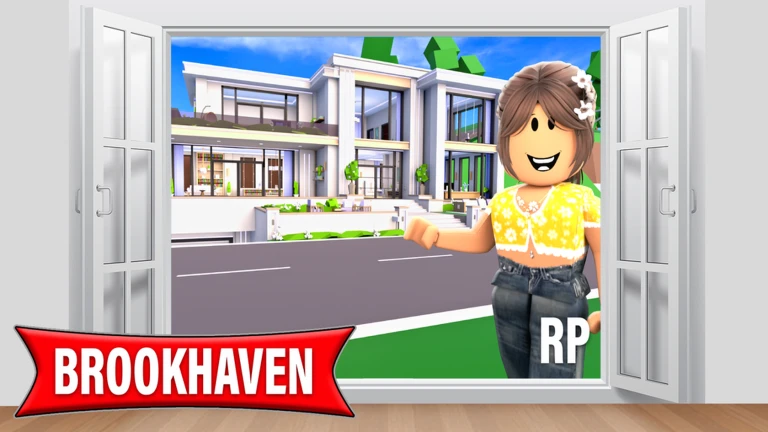
Start with one sentence that names the characters, location, and immediate problem. Choose only the house, vehicle, and props that support that first scene, agree on a reset rule, and expand the story after everyone has completed one clear action.
Write the first scene in one sentence
Brookhaven's official Roblox description presents the experience as a place to roleplay, own houses, drive vehicles, explore the city, and become the character you want. That freedom is useful, but it can also leave a new group waiting for somebody else to invent the story. Fix that by writing one opening sentence with three parts: who the group is, where the scene starts, and what has just happened. A family arriving at a new home, a clinic receiving an unexpected visitor, or a news crew covering a city incident is enough. Do not write an entire episode before joining. The first sentence should give every player one obvious action and leave space for the group to decide what happens next.
Give every player a visible job
The reviewed gameplay reference treats jobs and social roles as roleplay identifiers rather than a required progression ladder. Use that distinction to keep the cast flexible. Assign each participant a visible responsibility for the opening scene: the driver gets everyone to the location, the host controls the house, the reporter asks the questions, or the responder coordinates the emergency. A job should explain what the character does next, not grant authority over the whole server. If a player joins late, add a role that connects to the current problem instead of restarting the story. If someone leaves, transfer the responsibility in character. This keeps the session moving without pretending that a menu label proves special tools, income, or mechanical advantages.
Choose a location before choosing decorations
Houses, public buildings, streets, and vehicles are scene-setting tools. Choose the first location according to the action the group needs to perform. A home supports arrivals, family scenes, and private conversations; a public facility supports a shared service or incident; a road and vehicle support travel, pursuit, or a change of scene. Once the location is chosen, add only the props or vehicles that make the next action clearer. A crowded room may look impressive but can make it harder for players to understand where to stand or what to use. Keep one entrance, one focal point, and one exit plan visible. Because the map and available assets change, verify names and access inside the current server instead of copying an old location list.
Use a house as a stage, not the whole story
The house reference describes several categories of player-selected properties and notes that access can depend on the plot, house type, or account entitlement. For planning, the important question is not which house is universally best. Ask which space supports the scene: how many roles need a clear place, whether visitors must find the entrance, whether the group needs a work area, and whether a public location would be easier. Walk through the chosen space once before inviting the cast. Pick a meeting point and identify any doors or controls that could interrupt the scene. If the desired house is unavailable, preserve the story by switching to a simpler location; do not make one paid or limited asset a requirement for participating.
Set one reset rule for interruptions
Open public servers introduce unrelated players, missing cast members, vehicles in the wrong place, and sudden scene changes. Agree on one short reset phrase before starting. When somebody uses it, the group returns to the last clear location and repeats only the interrupted action. Do not restart the entire story after every disruption. If an outside player wants to join, give them a small role with a defined entry point; if they do not follow the premise, move the scene or continue with the existing cast. Private servers offer additional owner controls according to the current official description, but those controls should support coordination rather than replace it. A clear reset rule remains useful in either server type.
End with a handoff, not a dead stop
A good first session ends after one problem changes state: the family settles in, the visitor receives help, the report is broadcast, or the group reaches the next location. Ask each player what their character wants to do next and save one unresolved choice for the following scene. This creates continuity without requiring a complicated lore document. Record only stable session decisions such as the cast, home base, and current objective. Do not publish or memorize exact house inventories, vehicle counts, access prices, hidden locations, or private-server settings from an old capture; those details can change. Recheck the live menus when the next session begins and adjust the story around what is actually available.
What changed across observed Roblox snapshots
This is our own dated history of the same public Roblox fields. It shows observed movement, not a prediction or an explanation for why players moved.
Source: QuestSignal immutable release history · newest five observations shown
What this guide does not assume
The guide uses the current official roleplay, house, vehicle, city-exploration, and private-server-control premise plus reviewed community descriptions of Brookhaven's sandbox systems. It does not claim exact asset counts, prices, cooldowns, hidden-location steps, premium access, job rewards, or permanent map layouts.
Refresh trigger: Refresh when the official Roblox description changes the core roleplay loop, private-server control categories change materially, or the current house, vehicle, role, or location interfaces no longer support the planning workflow.