Build a short Spinjitsu baseline, test the nearest wall that the live server presents, and repeat that wall before committing to a longer stage. After a clear, compare the Wins and available Spinjitsu choices before and after; the official page verifies the loop but does not publish fixed thresholds, prices, or reward values.
Start from the loop Roblox actually states
The current Roblox description gives a short loop: use Spinjitsu to smash through walls, beat stages to earn Wins, and unlock stronger Spinjitsu forms for more power. Treat those three statements as the map for a first session. Before copying a route from a video, identify the live power or level display, the closest wall, the current stage marker, and the part of the interface that reports Wins. The experience was created on July 23, 2026 and its official record changed on August 16, so a recorded route or title tag can lag behind the server. Your first goal is not a maximum form. It is to reproduce one power change, one wall attempt, and one visible result with the fewest moving parts.
Create a power baseline before chasing a wall
Stand in a clear area and watch the live Spinjitsu or level display while performing the ordinary action the current server presents. The creator calls the experience plus-one Spinjitsu, and official media shows plus-one symbols, but the checked text does not publish a complete gain formula, timing rule, or boost stack. Record the starting display, the action you took, and the ending display. Repeat the same short interval once. A baseline is useful only when the direction of change is consistent enough to compare with a wall attempt. If the result differs, check for an equipped form, a temporary multiplier, an offline reward, or a server update before assuming that one measurement applies to every player.
Test one wall and classify the failure
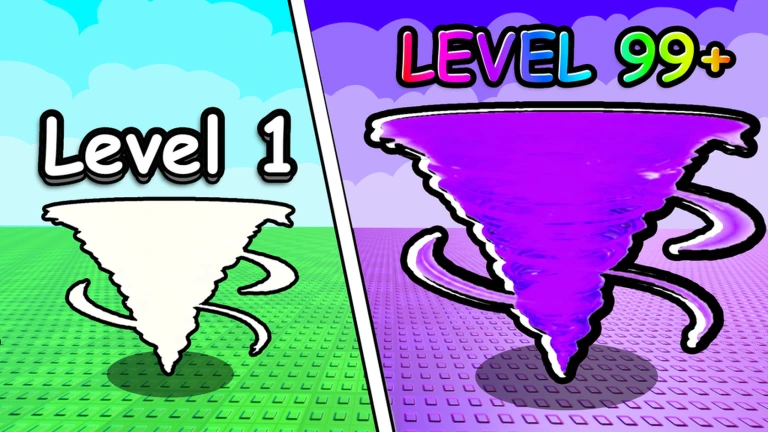
Use the nearest clearly presented wall as the first checkpoint. Current creator media shows a tornado striking through rock, which helps identify the intended wall-breaking presentation, but it does not certify a requirement table. Approach with the same equipped state and camera angle, make one attempt, and record whether the wall breaks, blocks progress, or displays a requirement. If the attempt fails, classify the cause as insufficient visible power, a missed interaction, an obstructed approach, or an unknown state. Change only one factor before trying again. This is faster than training blindly because every retry answers a specific question. Never turn a single account's wall requirement into a permanent site-wide number unless the live interface and a dated source establish it.
Treat the E Use prompt as a live instruction
One current creator-supplied Roblox image shows a rainbow tornado with an E Use prompt. That supports an inspection step for keyboard players, not a universal control guide for every device or every Spinjitsu form. When the prompt appears in your server, confirm which object or form is selected, press the displayed key once, and observe what changes. If no prompt appears, do not assume the feature is removed; account state, device controls, proximity, or the current update can alter the interface. Mobile and console players should follow their own visible prompt. Keep the action separate from a wall attempt the first time so you can tell whether the prompt changes equipment, activates a form, or does something else.
Review a stage completion through Wins
The official page says beating stages earns Wins that help players go farther. It does not state the amount for every stage, define every use of Wins, or promise that a recording's World 2 or Stage Eternal path is still unchanged. Before the finish, note the current Wins display and the stage name or marker visible in your session. After the clear, compare the display and inspect the next available wall, form, or route. If the result is unclear, repeat a short stage rather than stacking a new form, pet, and offline claim into the same test. A good stage review answers what visibly changed and which next obstacle became relevant. It does not claim a fastest farm, permanent reward, or unlock threshold from one run.
End with a four-line progression note
Write down the review date, the Spinjitsu baseline you reproduced, the last wall or stage you cleared, and the first unresolved question. Add a fifth line only when a visible prompt, Win change, or stronger-form choice altered the next decision. This note prevents an old video title, creator artwork, and a temporary server state from blending into one unreliable memory. On the next session, repeat the baseline before comparing progress. If the official title, description, media, wall presentation, stage route, or Win interface has changed, start a fresh note and retire the old assumptions. The durable method is simple: verify the live state, isolate one action, compare before and after, and leave unsupported numbers unknown.
What changed across observed Roblox snapshots
This is our own dated history of the same public Roblox fields. It shows observed movement, not a prediction or an explanation for why players moved.
Source: QuestSignal immutable release history · newest five observations shown
What this guide does not assume
The guide uses the current official Spinjitsu, wall, stage, Win, and stronger-form statements plus creator-supplied media and reviewed exact-game task demand. It does not assert permanent wall requirements, stage order, World 2 or Stage Eternal requirements, reward amounts, upgrade prices, offline timing, pet effects, ascension behavior, codes, or shortcuts.
Refresh trigger: Refresh after a material title or description change, replacement official media, a verified live power or wall-flow change, a changed stage or Win presentation, or replayable evidence that contradicts the routine.