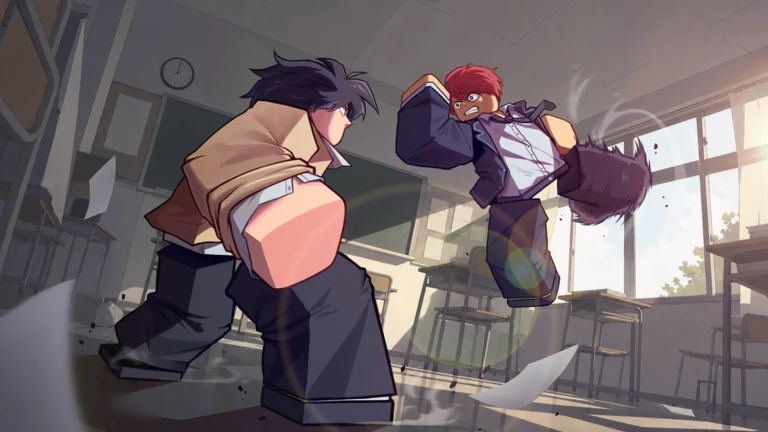
Keep a style until you can show that it fails a role you understand. Test it across several comparable fights, score range and consistency, set a reroll budget before opening the menu, and stop on a practical improvement rather than chasing a community label indefinitely.
Define the problem before touching the reroll menu
A reroll should answer a concrete problem. Write one sentence: the current style cannot reliably do what? Possible answers include reaching opponents at the range you prefer, maintaining pressure, recovering safely after a miss, or fitting the controls you can execute under stress. 'It is not S tier' is not a useful problem because the checked sources do not provide an official tier table. If you cannot name a repeatable failure, return to practice. Spending first and diagnosing later converts a learning issue into a resource issue.
- Name one failed job, not a vague dislike.
- Confirm the failure happened repeatedly under similar conditions.
- Do not use rarity, a video thumbnail, or another player's result as the only reason.
Score the current style on player-facing criteria
Use a simple zero-to-two score for five dimensions. Range asks whether the style reaches at the distance you naturally play. Pressure asks whether you can keep an opponent responding. Readability asks whether you understand what each action is trying to do. Recovery asks whether mistakes leave you helpless. Control comfort asks whether you can execute the style on your device. Ten points is not a hidden power rating; it is a personal fit record. Repeat the score after practice so improvement is not mistaken for a balance change.
- 0 means the job repeatedly fails.
- 1 means it works only with favorable conditions.
- 2 means it is reliable in your current hands.
- Record a short example beside every score.
Separate community vocabulary from verified rankings
The owned specialist review tracks community discussion around Wrestling, Boxing, Muay Thai, Hakari, Capoeira, Basic, and Slugger. Those names help you recognize the subject of a guide or update, but their presence does not make a current official ranking. Community lists may also assume experienced controls, a particular height or hitbox preference, or an earlier balance state. Use them to form a test question: does this style solve my range or pressure problem? Then require evidence from your own comparable fights before spending further.
- Treat style names as reference vocabulary.
- Treat rank labels as dated community opinions unless a supported comparison is shown.
- Re-test after creator balance notes rather than carrying an old placement forward.
Set the budget and stop rule before rolling
Decide the maximum number of rerolls you can spend without damaging the rest of your session. Then write two stop conditions. The first is a practical stop: keep a style that scores better on the job you identified. The second is a safety stop: stop when the budget is reached even if the result is not exciting. Do not increase the budget after a disappointing roll. If a code or event reward is only community-reported, do not count it as guaranteed inventory until it appears in your account. The rule protects progress from a moving code and balance environment.
- Budget before opening the menu.
- Stop on a usable improvement, not only a dream style.
- Never borrow from a resource reserved for another visible progression task.
Test a new result under the same conditions
A new style should face the same five-run loop as the old one. Use the same device, similar opponent pressure, and the same evaluation dimensions. Avoid declaring victory after one lucky exchange. Compare the notes rather than the animation spectacle. If range improves but recovery becomes worse, decide which matters for your actual goal. If the new result is merely different, keep the one you can execute. A fair comparison is more valuable than an exact numerical tier built from sources that never published the underlying statistics.
- Keep device and control setup constant.
- Use the same range, pressure, readability, recovery, and comfort scores.
- Compare at least several attempts before deciding.
Troubleshoot a bad result without chasing
If every style feels weak, return to controls and defense practice; the shared failure may be player execution. If a new school or hallway layout makes fights feel different, retest spacing in the current map. If community lists suddenly change, look for an attributable creator update before assuming a balance patch. If the budget is gone, stop. A future reward can fund another planned test, but it should not erase today's stop rule. The best outcome is not always the rarest style; it is a style that performs the required job consistently while preserving enough resources for the rest of the game.
- All styles feel weak: diagnose controls.
- Only one area feels bad: diagnose map spacing.
- Rankings moved overnight: look for a dated source.
- Budget reached: end the reroll session.
What changed across observed Roblox snapshots
This is our own dated history of the same public Roblox fields. It shows observed movement, not a prediction or an explanation for why players moved.
Source: QuestSignal immutable release history · newest five observations shown
What this guide does not assume
The evaluation model is an original player workflow synthesized from the reviewed same-game source's style, map, and reroll coverage. It does not claim official style statistics, odds, heights, prices, code rewards, or a permanent tier order. Community style names remain reference terms, not verified power claims.
Refresh trigger: Refresh after an attributable creator balance note, a verified change to style names or reroll mechanics, or repeatable first-hand comparisons that support additional criteria.