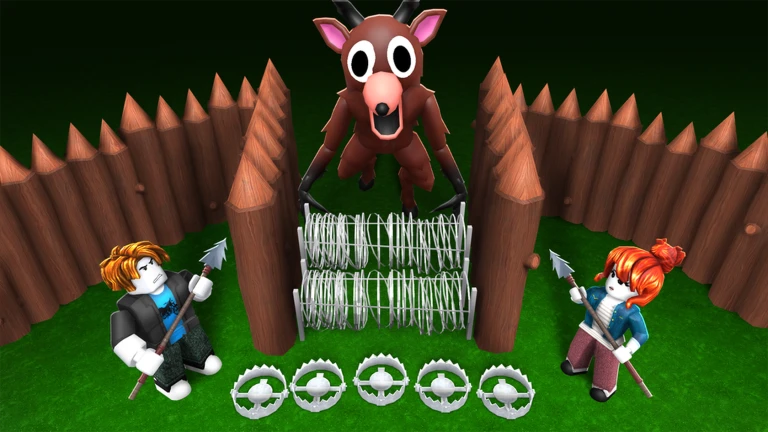
Treat every day as a short preparation window: stabilize the camp, gather with a return point in mind, regroup before visibility drops, and only expand the plan after the team can repeat that cycle safely.
Learn the actual loop before chasing a long run
The official Roblox description gives the durable premise: build a camp with friends while something watches from the forest. That makes the camp your reference point and the day-to-night transition your first real deadline. On an opening run, do not measure success only by how far you travel or how rare an item looks. Measure whether you can leave camp, return with useful supplies, and enter the next night with enough visibility and safety to make another trip. This shorter loop teaches the map's risk rhythm without depending on a fixed spawn or a community speedrun. If a particular resource, enemy, or route changes in an update, the prepare-explore-return structure still remains useful.
Give the camp a minimum-ready state
Before the group scatters, agree on what must be true at camp: the fire is visibly stable, someone knows the current food situation, and loose supplies are placed where returning players can find them. The reviewed campfire reference describes the fire as a light, safety, and progression system, so letting it become an afterthought creates several problems at once. A minimum-ready state is not a demand to hoard everything near the fire. It is a checkpoint. When the checkpoint is met, one player can gather farther away while another handles nearby food or materials. When it is not met, additional exploration creates more travel risk without fixing the team's weakest system.
Explore with a return trigger, not a vague feeling
Set a return trigger before leaving: a visible change in light, a chosen inventory limit, a teammate call, or a fixed point in your route. New players often turn back only after they feel lost, which is too late to make a calm decision. Keep your outward path simple enough to reverse and avoid changing direction repeatedly just because one more object appears ahead. If you reach the trigger with poor supplies, return anyway and improve the next trip. The goal is to build reliable information about travel time. A modest haul delivered safely is more useful than valuable loot stranded beyond the point where the team can regroup before night pressure increases.
Split team jobs without locking anyone into a class
In a group, assign temporary jobs around current needs rather than treating class choice as a permanent social rank. One player can watch camp condition and organize returns, one can gather nearby fuel or food, and one can scout a bounded route. Rotate after a cycle so everyone understands the whole system. The class reference confirms that classes can change starting advantages and progression, but it does not make one player solely responsible for a task forever. If a specialist leaves the server, the camp should still function. In solo play, perform the same jobs sequentially: stabilize, gather, inspect the next route, then return. A written order replaces the communication a team would otherwise provide.
Use fuel as a time budget
The campfire reference lists several fuel categories and notes that weather can increase pressure on the fire. Instead of memorizing an exact universal recipe, read fuel as the amount of safe time available for the next task. Common material can maintain the immediate cycle; better fuel may be worth saving for a longer outing or difficult weather. Check the fire before committing the group to a distant objective and again when players return. If the fire is dropping faster than the team expected, shorten the next route rather than hoping the same plan will suddenly work. This decision rule stays honest when balance values change because it uses the live meter and current conditions rather than a fixed percentage copied from an old guide.
Review one failure and change one variable
After an early loss, identify the first point where the loop broke. Did the team leave before camp was ready, miss its return trigger, split too far apart, or spend supplies without checking the next night? Change one variable on the next attempt. Returning earlier teaches more than changing class, route, and equipment all at once. Keep update-sensitive claims separate from the routine: named enemies, exact fuel values, class costs, and reward thresholds should be rechecked in the current game or a freshly maintained reference. A beginner guide is most useful when it helps a player diagnose a run, not when it promises that a single build will survive every patch.
What changed across observed Roblox snapshots
This is our own dated history of the same public Roblox fields. It shows observed movement, not a prediction or an explanation for why players moved.
Source: QuestSignal immutable release history · newest five observations shown
What this guide does not assume
The official listing supports the cooperative camp-building survival premise. The campfire and class references support system categories and team-planning concepts. Exact spawn routes, item counts, class rankings, enemy behavior, reward thresholds, and current balance values are deliberately excluded unless reverified against the live game.
Refresh trigger: Refresh when the official description changes the core loop, a major update alters campfire or class behavior, or repeatable current play shows that the prepare-explore-return routine no longer matches the game.